

How Inner-Directed Attention Becomes a Strength
Introversion describes a steady preference for depth, reflection, and restoration through quieter environments, not an allergy to people. Rather than being shy by default, an inwardly oriented person typically monitors stimulation levels, curates context, and invests attention where it truly counts. Across everyday life, this pattern shows up as measured speech, methodical thinking, and an ability to stay with ideas longer than most. The result is often crisp judgment, distilled insights, and an uncanny knack for anticipating consequences before they surface. In families, classrooms, and organizations, these steadying qualities function like ballast, keeping teams thoughtful when noise rises.

In everyday language, the phrase what is the introvert surfaces when people seek a plain-English explanation. Psychology texts clarify the extraverted meaning by differentiating sociability from energy sourcing. Within personality science, the query is introvert a personality sits alongside discussions of traits and temperaments. What matters most is that inner-directed attention functions as a reliable resource, enabling meticulous work, long-form learning, and relationships grounded in listening. When the world spins fast, this cadence can feel like a competitive advantage because it resists fads and prizes substance.
-
![]() Deep processing supports robust problem-solving in complex or ambiguous domains.
Deep processing supports robust problem-solving in complex or ambiguous domains. -
![]() Attentive listening strengthens trust, rapport, and nuanced collaboration.
Attentive listening strengthens trust, rapport, and nuanced collaboration. -
![]() Calm focus helps during crises, audits, and high-stakes negotiations.
Calm focus helps during crises, audits, and high-stakes negotiations.

Test Yourself & Discover if You're an Introvert or Extrovert
Common hallmarks include steady concentration, a preference for fewer but richer conversations, and an inclination to think before speaking. These patterns do not imply social aversion; they indicate deliberate pacing and a desire for signal over noise. Many myths persist, such as assuming that quiet equals disengaged, or that leadership requires constant performative enthusiasm. In reality, sustainable influence can be soft-spoken, and decisive direction can coexist with calm composure. When environments respect diverse tempos, high-quality contributions compound.
| Introverted Strength | Real-life Advantage | How to Leverage |
|---|---|---|
| Deep focus | High-quality output on complex tasks | Timebox uninterrupted blocks and silence notifications |
| Reflective thinking | Fewer errors and clearer decisions | Write decision briefs before meetings |
| Attentive listening | Trusted relationships and better requirements | Use clarifying questions and recap agreements |
| Calm presence | Stability in crises and negotiations | Prepare checklists and lead with process |
In practical conversations, the phrase 4 types of introverts pops up when distinguishing social, thinking, anxious, and restrained variants. In casual talk, some people ask whether what is extroverted introvert captures flexible behavior or an oxymoron. For teaming and planning, the expression introvert extrovert anchors a shared shorthand across disciplines. These everyday labels can be helpful, provided they are used as starting points for understanding and not as boxes that limit potential. To make strengths tangible, the quick reference below maps hallmark traits to pragmatic benefits and everyday tactics.
-
![]() Misconception: quiet equals weak; Reality: quiet can signal deliberation and restraint.
Misconception: quiet equals weak; Reality: quiet can signal deliberation and restraint. -
![]() Misconception: leaders must be gregarious; Reality: leaders must be effective, and style diversity helps.
Misconception: leaders must be gregarious; Reality: leaders must be effective, and style diversity helps. -
![]() Misconception: solitude is avoidance; Reality: solitude is a performance recharge strategy.
Misconception: solitude is avoidance; Reality: solitude is a performance recharge strategy.
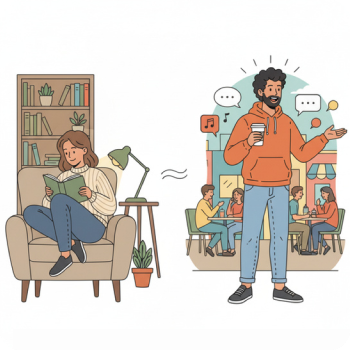
Success for inward-oriented people often hinges on designing the day around their energy economics. Short recovery intervals between meetings, thoughtful agendas, and written pre-reads help ensure that contributions land with precision. Strategic solitude improves memory consolidation and creativity, which translates into better execution and fewer rework cycles. Frequent context switches drain attention, so clustering similar tasks can noticeably improve output. With the basics right, the same person who seems quiet in a crowd can become a powerhouse in focused collaboration.
Start the TestHow Introvert–Extrovert Tests Provide Clarity
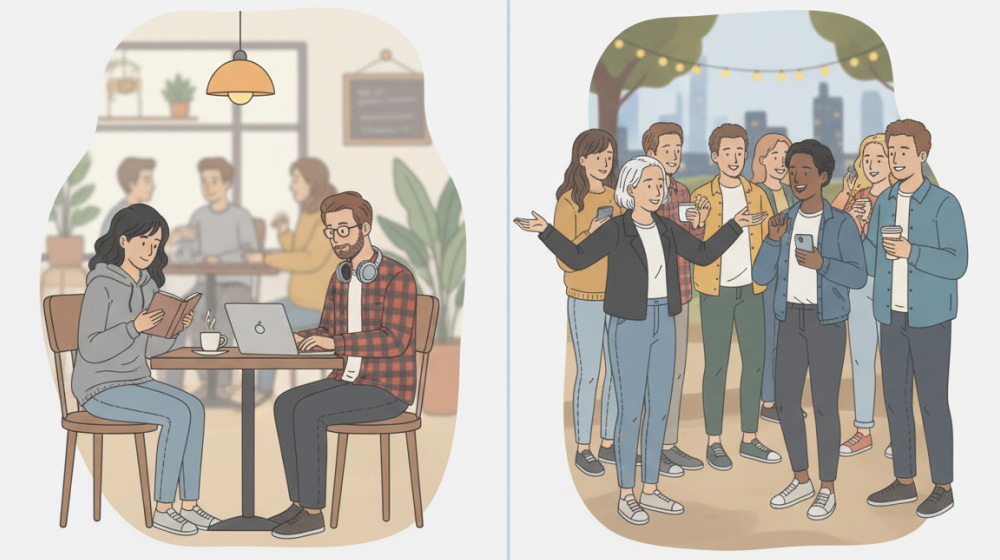
During reflective journaling, the thought am i an introvert often arrives after crowded weeks and noisy travel. When collecting baseline indicators, a structured introvert extrovert test complements notes from peers and mentors. For sharper insight, a focused introvert test examines sensitivity to stimulation and recovery preferences. Evidence-based routines, like setting meeting purposes, using agendas, and reserving cool-down slots, magnify these benefits. Over time, small environmental tweaks can add up to major gains in clarity and stamina.
-
![]() Batch deep work in morning or late-day windows to minimize interruptions.
Batch deep work in morning or late-day windows to minimize interruptions. -
![]() Use written brainstorming before live sessions to raise idea diversity.
Use written brainstorming before live sessions to raise idea diversity. -
![]() Adopt noise management: quiet spaces, soft headphones, and signal filters.
Adopt noise management: quiet spaces, soft headphones, and signal filters.

Synergy Through Diverse Styles
Discourse about temperament often drifts into binaries, but real humans present complex blends shaped by context. Social energy is only one dimension among many, including openness, conscientiousness, and emotional stability. In creative projects, quieter contributors might map systems and risks, while outwardly oriented teammates scout networks and momentum. The best collaborations respect both contributions and sequence them wisely, so the right strengths show up at the right time. That choreography turns diversity of style into practical synergy.
Start the TestThe Real Differences Between Introverts and Extroverts
In comparative psychology, the pairing introvert vs extrovert frames how reward sensitivity and attention orient differently. In office debates, the flip phrasing extrovert vs introvert sometimes reduces temperament to talk volume. Across evidence reviews, the phrase difference between introvert and extrovert points to arousal thresholds and sociability norms. None of these summaries should be treated as destiny, because development, culture, and skills training all shape visible behavior. What matters is building teams that value preparation, momentum, and reflection in equal measure.

Ambiversion, Growth, and Self-Discovery
Your presentation can flex with stakes, culture, and health, so any label should feel descriptive, not prescriptive. Many people discover that they sit near the middle, thriving with a blend of social engagement and reflective recharge. Others find their groove by shaping environment and schedule rather than changing fundamental temperament. Over the lifespan, skills accumulate, and once-daunting contexts can become comfortable through rehearsal, scaffolding, and feedback. Self-awareness, not self-limitation, is the goal. In workplace education, the baseline concept what is the extrovert helps teams normalize various collaboration rhythms. In modern typology, the triad introvert extrovert ambivert depicts a continuum of comfort zones in social energy. For quick orientation, an accessible am i introvert or extrovert quiz can seed hypotheses before deeper reflection. Whatever your spot today, you can architect habits and habitats that make your best work feel sustainable. The aim is to leverage strengths while inoculating against overload.
Take the Introvert or Extrovert Personality Quiz
Get Started-
![]() Define red-line limits for noise, meeting length, and context switching.
Define red-line limits for noise, meeting length, and context switching. -
![]() Use rituals to transition between collaboration and deep concentration.
Use rituals to transition between collaboration and deep concentration. -
![]() Practice micro-doses of stretch situations with clear recovery plans
Practice micro-doses of stretch situations with clear recovery plans
Frequently Asked Questions
- How is introversion different from shyness?Shyness is fear-based hesitation, while introversion is a neutral preference for lower stimulation. A person can be outgoing and still recharge best in calm settings.
- Can introverts enjoy public speaking or leadership?Absolutely, especially with preparation and recovery strategies. Many respected leaders influence through clarity, listening, and measured decisions rather than constant visibility.
- Do introverts dislike group work?Most appreciate groups that use structure, clear roles, and pre-work. The issue is rarely people; it is unmanaged noise and unclear purpose.
- What environments help introverts do their best workSpaces with control over sound, frequent quiet blocks, and asynchronous collaboration tools. Design that respects focus tends to lift outcomes for everyone.
- Can your level of introversion change over time?Baseline tendencies are fairly stable, but skills and comfort can grow with practice. Context, health, and habits can make your presentation more flexible.
The Latest News
 Introvert Vs Extrovert Quiz: the Ultimate Guide to Energy Spectrum Quizzes Take the Introvert or Extrovert Personality Quiz Get Started Understanding the Introversion–Extraversion Spectrum and Why Quizzes Resonate Human energy and attention ebb and flow in ways that shape focus, collaboration, and recovery. Rather than forcing rigid labels, modern as...
 - 8 December, 2025
- Introvert Vs Extrovert Test: A Comprehensive Guide to Testing Take the Introvert or Extrovert Personality Quiz Get Started Understanding the Social Energy Spectrum and Why It Matters Human social energy operates on a continuum, not a binary switch. Some people recharge in solitude, others thrive in bustling environments, and many oscillate dep...
- 5 December, 2025
- Introversion Explained: Evidence, Benefits, and Real-World Guidance Take the Introvert or Extrovert Personality Quiz Get Started What Does It Mean to Call Someone an Introvert? People often confuse introversion with shyness, low self-esteem, or social anxiety, yet those are distinct experiences. At its core, introversion describes where a person mos...
- 4 December, 2025
Please Note
This website (introvert-or-extrovert-quiz.com) is not an official representative, creator or developer of this application, or product. All the copyrighted materials belong to their respective owners. All the content on this website is used for educational and informative purposes only.